


Content Menu
● 100 Ton Chiller Cost Overview
● Installation and Operating Costs
● Efficiency Matters More Than Buyers Think
● FAQ
>> How much does a 100 ton chiller cost?
>> Is water-cooled better than air-cooled?
>> What affects the final price most?
>> How long can a 100 ton chiller last?
>> How do I reduce operating cost?
>> What is the best choice for a factory?
A 100 ton chiller cost can vary widely depending on chiller type, efficiency level, installation scope, and operating conditions. In most industrial projects, the real cost is not just the purchase price, but the total cost of ownership across the full service life.
What a 100 Ton Chiller Is
A 100 ton chiller is a cooling system designed to remove about 100 refrigeration tons of heat. It is commonly used in manufacturing plants, food processing facilities, data centers, commercial buildings, and other high-load environments where temperature stability matters.
In simple terms, this is the kind of equipment buyers choose when process uptime, thermal consistency, and long-term reliability are more important than the lowest upfront price. For that reason, comparing models only by sticker price often leads to the wrong decision.
100 Ton Chiller Cost Overview
For most industrial buyers, a new 100 ton chiller may fall in the range of $50,000 to $150,000+ for air-cooled systems, while water-cooled systems can reach $250,000 or more depending on configuration and controls. Refurbished units may reduce initial spending, but they also introduce more uncertainty around remaining service life, warranty coverage, and maintenance exposure.
A useful way to evaluate pricing is by cost per ton. The materials you provided show that per-ton pricing can differ significantly by configuration, with scroll air-cooled units at roughly $600 to $900 per ton and screw water-cooled units at roughly $1,100 to $1,800 per ton. In 2026 market data, a benchmark water-cooled chiller price was reported at $482 per ton for a TR capacity between 50 and 600, showing how market conditions and procurement scope can shift pricing benchmarks.
Main Pricing Drivers
Several factors shape the final price of a 100 ton chiller, and buyers should review them together rather than in isolation. These drivers also explain why two units with the same nominal capacity can have very different bids.
– Chiller type. Air-cooled units usually cost less and are simpler to install, while water-cooled systems require towers, pumps, and plumbing.
– Energy efficiency. Higher-efficiency models usually cost more upfront, but they can lower electricity spend over time.
– Compressor design. Scroll compressors are often more economical for moderate loads, while screw and centrifugal systems are better suited for demanding industrial duty.
– Controls and automation. Remote monitoring, fault alarms, and intelligent control logic increase the purchase price but improve operating stability.
– Materials and build quality. Corrosion-resistant metals and heavy-duty components support longer life in harsh environments.
– Brand and support. Well-known suppliers often charge more because they provide stronger after-sales service, spare parts availability, and better reliability records.
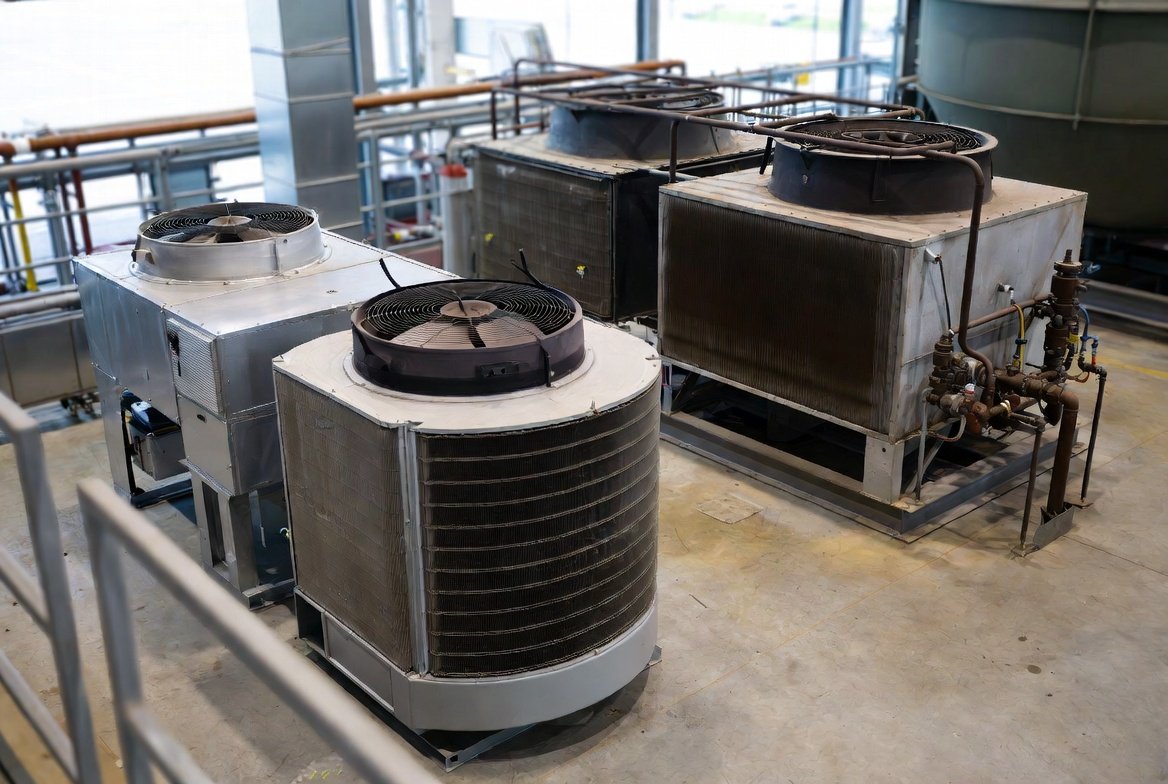
Air-Cooled vs Water-Cooled
The most important early decision is often whether to choose air-cooled or water-cooled equipment. This choice affects not only the purchase cost, but also installation complexity, maintenance workload, and energy performance.
| Factor | Air-Cooled Chiller | Water-Cooled Chiller |
|---|---|---|
| Upfront cost | Lower | Higher |
| Installation | Simpler and faster | More complex, needs tower and pumps |
| Water use | Minimal | Higher |
| Energy efficiency | Usually lower under heavy loads | Usually stronger in continuous duty |
| Best use case | Sites with limited water or space | High-load, long-hour industrial operation |
If your project runs around the clock, a water-cooled system may justify its higher initial cost through lower energy consumption and better performance stability. If your site has limited water access or installation space, an air-cooled model may be the more practical choice.
Installation and Operating Costs
The initial quote is only one part of the budget. Installation can add several thousand dollars for air-cooled systems and may exceed $15,000 to $50,000+ for water-cooled projects, depending on tower selection, piping, electrical work, and site conditions.
Operating cost is usually the largest long-term expense. Chiller systems can account for a major share of electricity usage in commercial and industrial facilities, and inefficient operation often comes from high condenser pressure, poor heat transfer, and excessive compressor load. In practical terms, a lower purchase price can be misleading if the unit consumes significantly more power over 10 to 15 years.
Efficiency Matters More Than Buyers Think
Efficiency is not just a technical spec. It directly affects the monthly utility bill, the maintenance schedule, and the useful life of the equipment. Benchmark studies show that improving operating conditions can lift system performance meaningfully, while poor temperature control and weak water-side management reduce COP and raise energy cost.
A field benchmark cited in the research showed average technical efficiency of 0.85, with system COP improving from 3.87 to 4.56 after tuning temperature-related variables. Another study of water-cooled centrifugal systems found COP values ranging from 1.92 to 4.07, with average performance below the stronger benchmark region of COP > 4. For buyers, this means that system design, plant tuning, and maintenance discipline matter almost as much as the brand name on the nameplate.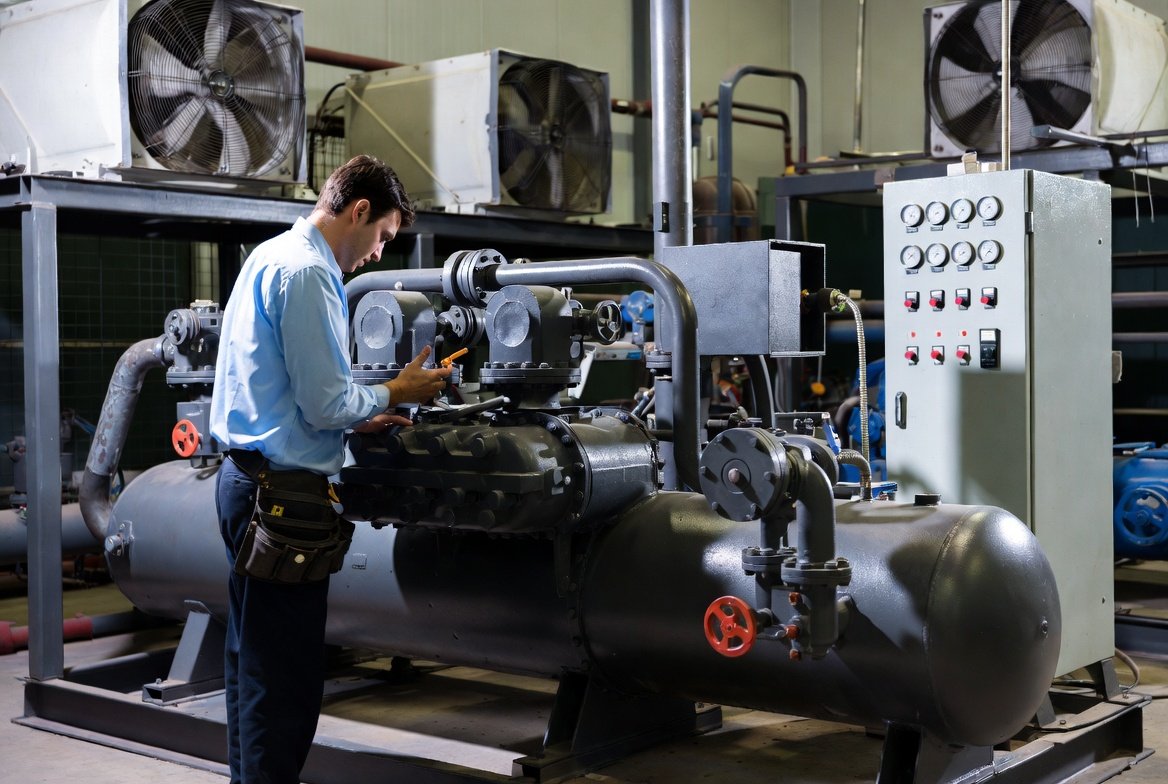
Hidden Costs Buyers Miss
Many projects exceed budget because teams focus only on the equipment quote. A better procurement process looks at the complete lifecycle, including service, downtime risk, and eventual replacement.
– Spare parts and service access.
– Water treatment and cleaning for water-cooled systems.
– Power quality and electrical upgrades.
– Structural work or rooftop support.
– Commissioning and training.
– Replacement of consumables and wear parts.
These items can change the economics of a project dramatically. In some cases, a slightly higher-capacity or higher-efficiency model produces a lower total cost because it reduces service events and energy waste over time.
How to Buy the Right Unit
A structured buying process helps avoid expensive mismatches. The best choice depends on load profile, climate, water availability, and operating hours.
1. Define the real cooling load. Confirm whether 100 tons is the steady load or the peak load.
2. Check site limits. Review roof space, water access, noise limits, and electrical capacity.
3. Choose the cooling method. Compare air-cooled and water-cooled options based on your infrastructure.
4. Review efficiency data. Ask for performance details at part-load and full-load conditions.
5. Estimate lifetime cost. Combine purchase, installation, energy, and maintenance into one model.
6. Request service support details. Confirm warranty, spare parts lead time, and local technical support.
This approach is especially useful for factories, food facilities, and cold-chain users, where downtime can be more expensive than the equipment itself.
Industry Use Cases
A 100 ton chiller is not a generic product. Different industries prioritize different outcomes, and that changes the ideal specification.
– Manufacturing plants need stable process temperatures and dependable uptime.
– Food processing facilities need precise temperature control and hygiene-friendly design.
– Data centers need high reliability, redundancy, and efficient continuous operation.
– Commercial buildings often focus on space, noise, and electricity cost.
– Cold storage sites need stable low-temperature performance with predictable maintenance.
Because the operating environment differs so much, the same 100 ton system can produce very different real-world results.
Expert Perspective
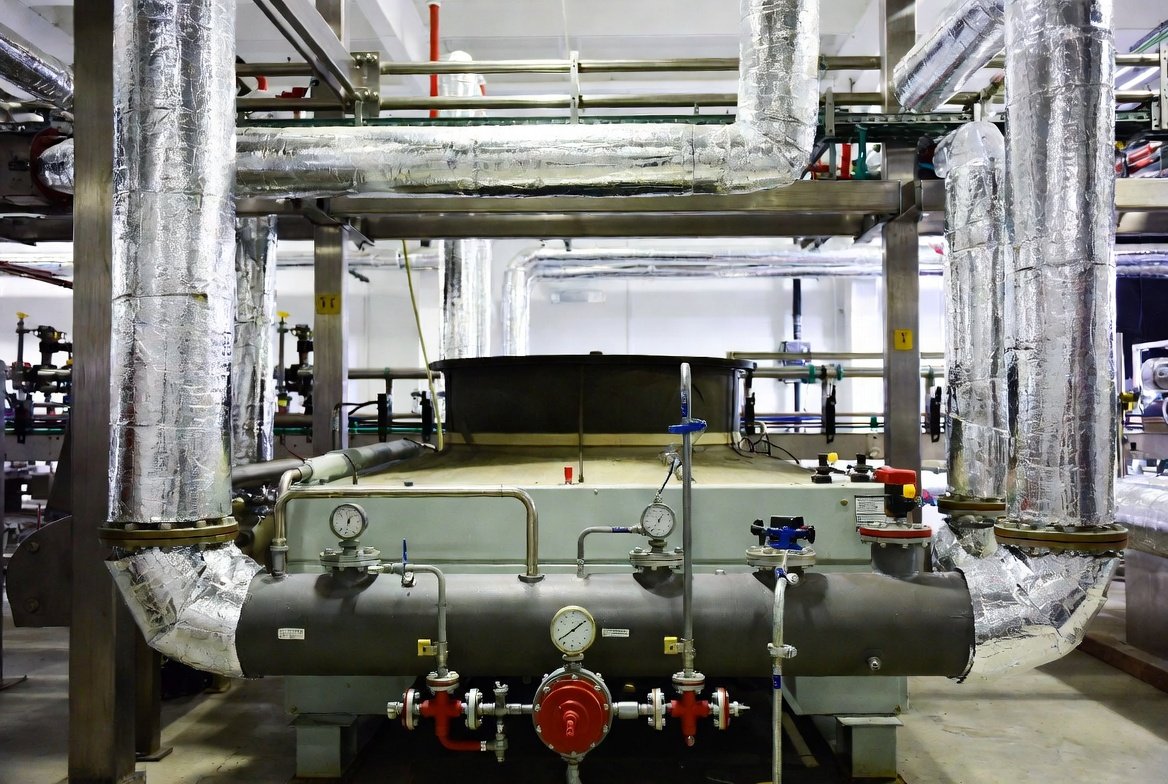
From a buyer’s perspective, the smartest procurement choice is usually not the cheapest machine. It is the machine that delivers the lowest total ownership cost while matching the site’s real operating pattern.
In heavy-duty applications, water-cooled chillers often justify their higher entry cost through better efficiency and stronger performance at continuous load. In smaller or space-constrained projects, air-cooled systems remain attractive because they reduce installation complexity and simplify deployment. This is why a strong quotation should always include operating assumptions, not just a product model and price.
Why Buyers Choose Us
For industrial buyers, the best supplier is one that can support the full project cycle: selection, engineering, installation, commissioning, and after-sales service. Zhejiang Kingfit Environment Co., Ltd. focuses on industrial refrigeration and intelligent environmental control solutions, which is especially relevant for manufacturing, agriculture, food processing, and cold-chain applications.
If your project needs a 100 ton chiller, the right next step is to request a tailored proposal based on load, ambient conditions, and operating hours. That allows you to compare real performance, not just catalog price.
FAQ
How much does a 100 ton chiller cost?
A 100 ton chiller can cost roughly $50,000 to $150,000+ for many air-cooled industrial models, while water-cooled systems can go much higher depending on design and accessories.
Is water-cooled better than air-cooled?
Water-cooled systems are often better for continuous high-load operation because they can offer stronger efficiency, but they require more infrastructure and higher upfront investment.
What affects the final price most?
The biggest drivers are chiller type, efficiency level, compressor selection, installation complexity, controls, and site conditions.
How long can a 100 ton chiller last?
With proper maintenance, a 100 ton chiller may last 15 to 30 years depending on operating conditions and service quality.
How do I reduce operating cost?
Focus on proper sizing, efficient controls, routine maintenance, clean heat exchange surfaces, and optimized temperature settings.
What is the best choice for a factory?
For many factories, the best option is the one that balances reliability, efficiency, and service support rather than simply the lowest quote.
References
– [How much Does 100 Ton Chiller Cost?]
– [Chillers in the US Procurement Price, Data and Insights]
– [Chiller system performance benchmark by data envelopment analysis]
– [Performance Evaluation and Optimization of Chiller Systems]
– [Chiller Efficiency Metrics – HVAC Systems Encyclopedia]
– [Optimizing Chilled Water Plant Performance]
Hot Tags: 100 Ton Chiller Cost, Industrial Chiller Price, Water Cooled Chiller, Air Cooled Chiller, Chiller Price Per Ton, Industrial Cooling System, Chiller Installation Cost, Chiller Energy Efficiency, Manufacturing Cooling Solutions, Cold Chain Refrigeration